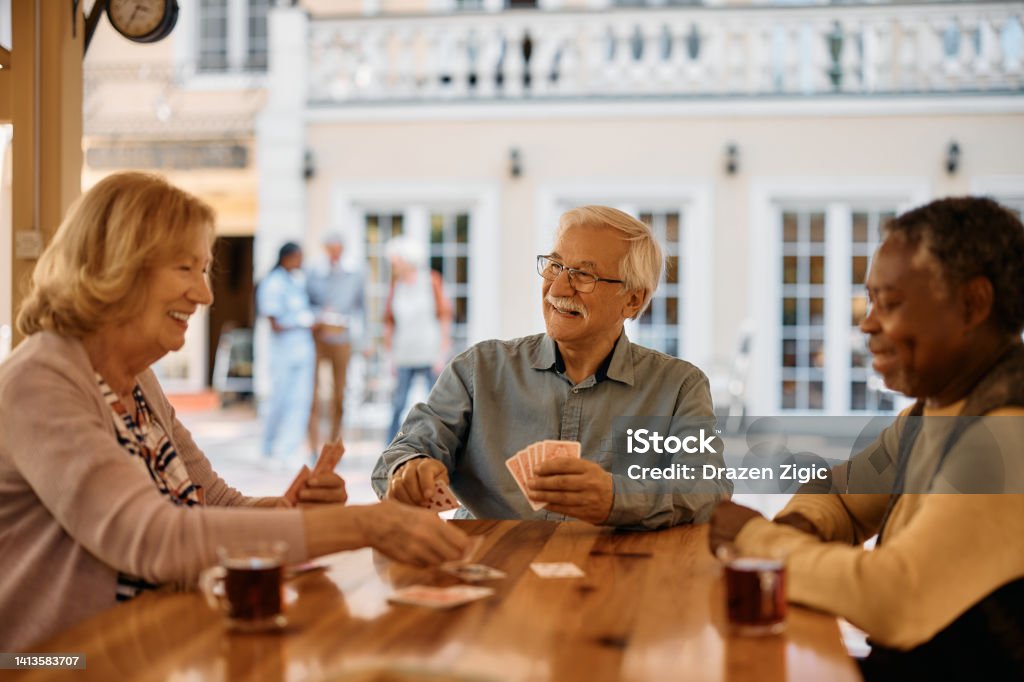
Multiracial group of happy seniors playing card at nursing home. Focus of on man in the middle.
There’s a certain magic in the shuffle of cards, the clink of chips, and the quiet tension around a felt table. For many seniors, poker isn’t just a pastime—it’s a lifeline. It’s a way to keep the mind sharp, the spirit engaged, and the social calendar full. But let’s be honest: the game you played in your forties might not suit you the same way at seventy. That’s not a bad thing. It just means adjusting your approach, both strategically and socially.
So, whether you’re a seasoned player or someone looking to dip into the world of Texas Hold’em for the first time, this guide is for you. We’ll talk about the subtle shifts in strategy that make sense for older players, and the undeniable social benefits that come with regular play. No fluff, just real talk.
Why Poker Appeals to the Senior Mind
Poker is one of the few games where luck and skill dance together. For seniors, that dance is particularly attractive. It’s not about physical agility—it’s about mental flexibility. Studies have shown that engaging in complex card games can help delay cognitive decline. That’s a big deal. The National Institute on Aging has highlighted that activities requiring strategic thinking, memory, and quick decision-making are linked to better brain health in later years.
And honestly? There’s something deeply satisfying about outsmarting a younger opponent with pure experience. You’ve seen more, felt more, and probably bluffed through tougher situations in life than any river card can throw at you.
Strategy Adjustments: Playing Smarter, Not Harder
Let’s get into the meat of it. The way you play poker at 65+ should differ from your younger self. Here’s the deal—your strengths are patience, emotional control, and reading people. Your challenges? Maybe stamina for long sessions or keeping track of multiple variables at once. So, we adapt.
1. Tighter Starting Hands, Please
When you’re younger, you can afford to play more speculative hands. You have time to recover from bad beats. As a senior, your bankroll—and your energy—is better preserved by playing fewer, stronger hands. Fold more often pre-flop. Wait for premium pairs, strong aces, or suited connectors in position. This isn’t boring; it’s efficient. You’ll find that your win rate actually improves because you’re not bleeding chips on marginal hands.
2. Embrace the Power of Patience
Patience isn’t just a virtue in poker; it’s a weapon. Younger players often get antsy. They want action. You, on the other hand, can sit back and let them hang themselves. Use your natural calm to your advantage. When you do enter a pot, your raises carry more weight. Your opponents know you’re not messing around. That’s a psychological edge that’s hard to teach.
3. Manage Your Session Length
Look, mental fatigue is real. After two or three hours, your decision-making quality dips. Instead of pushing through, schedule shorter sessions. Play for 90 minutes, take a break, maybe even stop for the day. Quality over quantity. This keeps your mind sharp and your enjoyment high. It’s not about grinding; it’s about savoring.
4. Read the Table, Not Just the Cards
You’ve spent decades reading people—spouses, coworkers, grandkids. That skill translates beautifully to poker. Pay attention to betting patterns. Notice who’s nervous, who’s confident, who’s just there for the snacks. Your intuition is a superpower. Trust it. Sometimes, a fold based on a “feeling” is more accurate than a mathematical calculation.
5. Don’t Chase Losses
This one’s crucial. When you lose a big hand, there’s a temptation to get even. That’s a trap. Set a loss limit before you sit down. If you hit it, walk away. No shame in that. Discipline is what separates the hobbyists from the broken-hearted. You’ve lived long enough to know that tomorrow is another day.
The Social Side: More Than Just a Game
Now, let’s talk about the other half of the equation—the social benefits. And honestly, these might be even more valuable than the strategic wins.
Loneliness among seniors is a silent epidemic. According to the CDC, social isolation significantly increases the risk of premature death, dementia, heart disease, and depression. Poker, by its very nature, is a communal activity. You sit across from real people, share laughs, share losses, and share stories. It’s a built-in social network.
Building a Routine and a Community
Having a weekly poker game gives you something to look forward to. It’s a ritual. You know that every Tuesday at 2 PM, you’ll be with your friends, feeling the familiar weight of cards in your hands. That routine is grounding. It provides structure to your week, which is incredibly beneficial for mental health.
And the community? It’s everything. You’ll find people who share your humor, your competitive streak, and maybe even your taste in music. These are the folks who’ll check in on you if you miss a game. They become your support system, often without you even realizing it.
Keeping the Mind Active and Agile
Poker requires constant calculation, memory recall, and pattern recognition. It’s like a gym for your brain, but way more fun than a treadmill. Every hand is a new puzzle. You’re not just passing time; you’re actively engaging your cognitive functions. This mental stimulation is linked to a lower risk of Alzheimer’s and other forms of dementia. That’s a powerful reason to shuffle up.
Practical Tips for Starting or Joining a Game
So, you’re convinced. But how do you get started? Here are a few practical steps:
- Check local community centers: Many have free or low-cost poker nights specifically for seniors.
- Look into senior living communities: Even if you don’t live there, some open their game rooms to the public.
- Online poker rooms: Sites like PokerStars or Ignition offer play-money tables. Great for practice without pressure.
- Start your own home game: Invite a few neighbors. Keep the stakes low, the snacks high, and the conversation flowing.
And if you’re worried about the technical side—like understanding pot odds or betting structures—don’t be. There are plenty of free YouTube tutorials and even beginner-friendly books. You don’t need to be a math whiz. You just need to be willing to learn and laugh at your own mistakes.
A Word on Technology and Accessibility
If you have mobility issues or just prefer the comfort of your own home, online poker is a godsend. You can play from your couch, with a cup of tea, and still get that social interaction through chat features. Many platforms have “senior-friendly” interfaces with larger fonts and simpler layouts. It’s not the same as the live felt, but it’s a solid alternative.
That said, there’s something irreplaceable about the physical game. The tactile feel of chips, the eye contact, the subtle tells. If you can, try to mix both. A live game once a week, and an online game or two in between. Best of both worlds.
Final Thoughts: The Long Game
Poker, like life, is a long game. You don’t win every hand, and that’s okay. The real victory is in the showing up, the connections made, and the mental sharpness maintained. For seniors, poker offers a unique blend of challenge and companionship that few other activities can match.
So, next time you see a deck of cards, don’t just see a game. See an opportunity. An opportunity to engage your mind, to laugh with friends, and to remind yourself that you’re still in the game—in every sense of the phrase. The chips may be plastic, but the benefits are real. And that’s a bet worth making.