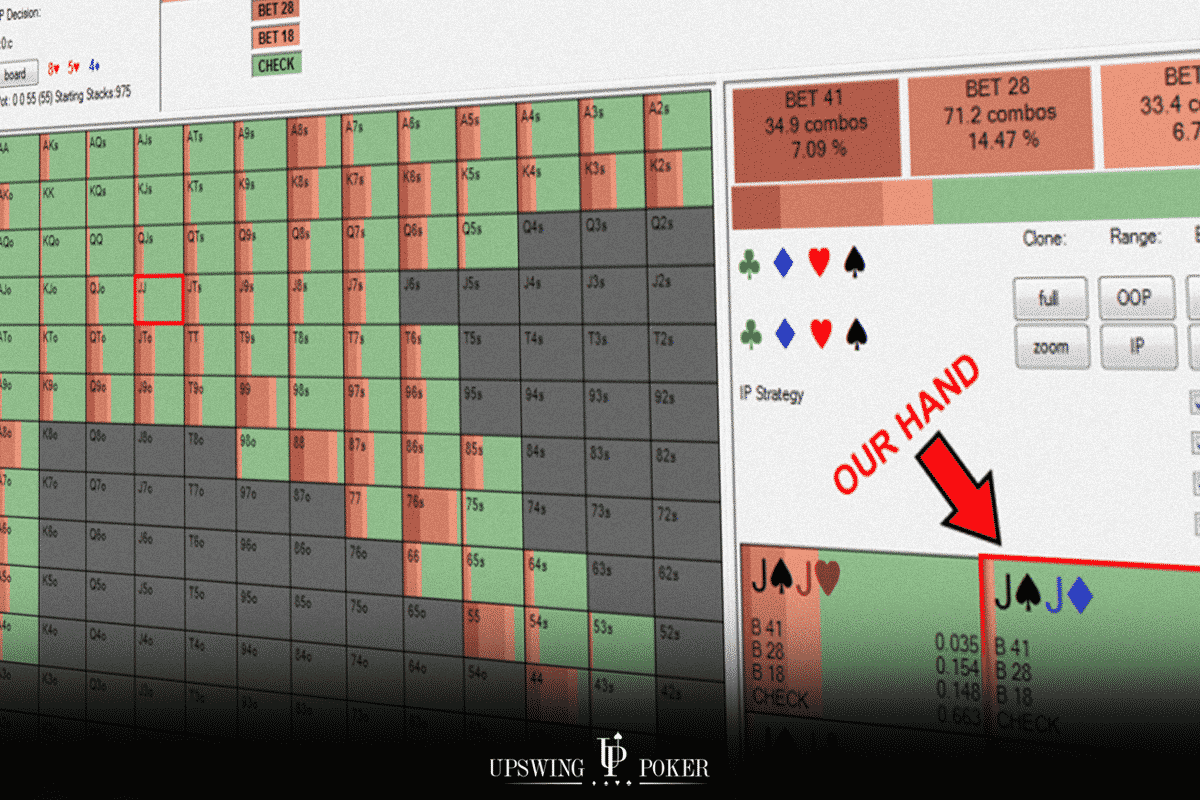
Let’s be honest — the first time you open a solver, it feels a bit like staring at the cockpit of a spaceship. Numbers everywhere. Weird bet sizings. A computer telling you to fold a hand you’ve been proudly playing since 2009. It’s humbling. But here’s the deal: solvers and GTO tools aren’t just for high-stakes pros anymore. If you’re grinding $0.05/$0.10 or $1/$2 live, they can still sharpen your game — you just have to use them differently.
GTO, or Game Theory Optimal, is basically a strategy that can’t be exploited over the long run. Solvers calculate that strategy by running millions of simulations. Sounds intimidating, sure. But you don’t need to memorize every node. You need to extract patterns, not recite charts like a robot.
Why Low-Stakes Games Are a Different Beast
Before you dive into solver work, understand this: low-stakes poker is not a GTO battleground. It’s a pool of recreational players who call too much, bluff too little, and rarely punish your mistakes. In fact, pure GTO can sometimes be wrong against these opponents. If someone never folds top pair, bluffing optimally means nothing — they’re just not folding.
So why bother with solvers at all? Because they teach you why certain lines work. They build intuition. And when you move up in stakes — or run into a tough regular — you’ll have a foundation that doesn’t crumble.
Choosing the Right Tools Without Breaking the Bank
You don’t need a $1,000 subscription. Honestly, most low-stakes players can get 90% of the value from a few affordable options.
- GTO Wizard — cloud-based, easy interface, has free daily solutions. Great for quick hand reviews.
- Flopzilla — not a full solver, but perfect for range vs. range equity work. Cheap and fast.
- Equilab — free. Basic equity calculations. A staple for any serious beginner.
- PioSolver — the gold standard, but expensive and heavy. Skip it until you’re playing mid-stakes.
- Simple Postflop — a nice middle ground. One-time payment, decent for study.
Start with one tool. Just one. Bouncing between five different programs is a recipe for confusion, not improvement.
How to Study Without Drowning in Data
Here’s a mistake I see constantly: a player runs a hand through a solver, sees a mixed strategy (say, bet 60% of the time, check 40%), and then tries to memorize it. That’s missing the point. Mixed strategies exist because both actions have similar EV. The solver is basically saying, “I don’t care much either way.”
Instead, focus on the big buckets:
- Which hands bet for value? Look at the top 15–20% of your range.
- Which hands bluff? Usually draws with backdoor equity or blockers.
- What bet size appears most? Low-stakes solvers love small bets (25–33% pot) on dry boards.
- How does the range shift on turns and rivers? This is where most amateurs leak money.
Spend 20 minutes on one spot. Not two hours on ten spots. Depth beats breadth when you’re starting out.
The 80/20 Rule for Solver Training
You don’t need to solve every possible board. In fact, you can’t. There are over 1.7 million flops. Instead, group boards into textures:
| Board Texture | Example | Key Solver Insight |
|---|---|---|
| Dry & Static | K♠ 7♦ 2♣ | Small c-bet (25%) with almost entire range |
| Wet & Dynamic | J♥ 10♥ 8♠ | Larger sizes (66–75%) and more checks |
| Paired | Q♣ Q♦ 5♥ | Frequent small bets, but watch for trips |
| Monotone | 9♠ 6♠ 3♠ | Polarized — bet big or check |
Learn one pattern per texture. That’s it. You’ll cover 80% of real-game scenarios without memorizing a single chart.
Don’t Ignore Exploitative Adjustments
Solvers assume your opponent plays perfectly. They don’t. At low stakes, you should deviate — a lot. If the table folds too much to 3-bets, bluff more. If they call every river bet with any pair, stop bluffing rivers entirely. GTO gives you the baseline; exploitation gives you the profit.
Think of it like a recipe. GTO is the exact measurements. Exploitation is adding extra garlic because you know your guests love it. Both matter, but one pays the bills at $1/$2.
A Simple Weekly Routine That Works
Here’s a schedule that won’t burn you out:
- Monday: Review 3 hands from your last session. No solver yet — just write down your thought process.
- Wednesday: Run those hands through a solver. Compare. Note one leak.
- Friday: Drill that leak using a trainer app or flash cards. 15 minutes max.
- Sunday: Play a session. Focus only on the leak you studied.
That’s maybe 90 minutes of study per week. Do that for three months, and you’ll be ahead of 95% of your low-stakes pool. Not because you’re a genius — because you’re consistent.
Common Traps to Avoid
Solvers can become a crutch. I’ve seen players spend hours clicking buttons, feeling productive, but never actually improving. Watch out for these:
- Results-oriented studying: “I lost with aces, so the solver must be wrong.” Nope.
- Over-mixing: If a solver says bet 51% and check 49%, just pick one. The EV difference is tiny.
- Ignoring population reads: Your $0.10/$0.25 opponents are not solver bots. Adjust.
- No note-taking: If you don’t write down what you learned, you’ll forget it by Tuesday.
And please — don’t try to explain GTO to the guy at the table who just called your 4-bet with 7-2 offsuit. He doesn’t care. Just take his money.
The Long Game
Poker training with solvers isn’t about becoming a machine. It’s about seeing the game through a clearer lens. You’ll still make mistakes. You’ll still punt off a stack now and then. But over time, those mistakes shrink. The edges grow. And one day you’ll realize you’re no longer guessing — you’re choosing.
That’s the quiet power of GTO tools for low-stakes players. Not perfection. Just fewer excuses.